





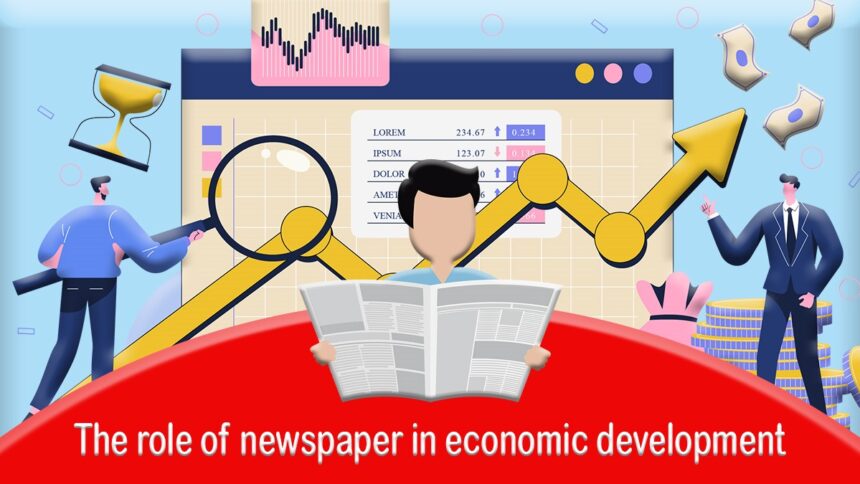
Economic progress requires not only improved infrastructure but also accurate information, awareness, and transparent policymaking. Newspapers play a silent yet strong role in these areas. An independent media does not just disseminate news but also lays the foundation for the country’s long-term development by ensuring economic reforms and accountability.
The availability of economic information is like oxygen for the economy. Almost all newspapers in the world, including all Bangla newspapers, inform the public about the stock market, agricultural production, commodity price fluctuations, government investment projects, and more. This information-based knowledge helps everyone, from a common businessman to a high-level investor, to make informed decisions.
An important function of newspapers is to hold policymakers accountable. Through various reports and investigations, the media ensures transparency in government spending and builds public opinion against corruption and waste. This monitoring is very effective in building a well-governed economy.
Newspapers create public awareness by publishing analyses of government budgets, policies, and development projects. As a result, people can not only form informed opinions but also become partners in the economy. This participation of the people is the direction of inclusive development.
Newspapers also play a strong role in economic reforms. For example, when issues such as mismanagement in the banking sector, complexity of tax administration, or shortage of agricultural inputs are published in newspapers, the government is forced to take relevant steps. Since these reports reflect public demands and real situations, they become the driving force of development.
In addition, newspapers contribute to the positive branding of the country. When a country is able to transparently and independently highlight economic dynamics in the media, foreign investors also feel safe to invest. Along with this, the confidence of international organizations in foreign cooperation and loans also increases.
Many studies have been conducted on the need for independent media. As Nobel laureate economist Amartya Sen said, “Where the media is independent, there is no famine.” This is because newspapers can deliver true and fresh information during disasters and crises, on the basis of which relief, cooperation, and planning can be carried out accurately.
There is no alternative to newspapers to ensure the free flow of information and the accountability of policymakers. To ensure public participation at every level of development, the media should not only be seen as a news distributor but also as a guide for the nation. In terms of economic development, the media is like an invisible force that, although unseen, has an impact everywhere.